
Do you need a high quality outdoor information sign or wayfinding signs?
Miller Metal Imaging designs and manufactures custom outdoor wayfinding signs, directional signage, maps and information panels for parks, trails, public spaces, zoos, visitor attractions, campuses and community facilities across Australia.
From a single directional sign to a complete wayfinding system, Miller can assist with project planning, design, printing, custom hardware and installation.


Clear signage helps people navigate with confidence
Effective wayfinding signage helps visitors understand where they are, where they need to go and how different areas connect.
Outdoor signs need to communicate information quickly and clearly while remaining easy to read in changing weather, lighting and site conditions.
Miller can produce signage for:
- Parks and reserves
- Walking and cycling trails
- National Parks
- Botanic gardens
- Visitor attractions
- Tourism destinations
- Schools and campuses
- Hospitals and healthcare precincts
- Council facilities
- Community spaces
- Commercial precincts
- Heritage sites
- Coastal and recreation areas


Outdoor wayfinding and information sign applications
Our custom signage can be designed and manufactured for a wide range of navigation and visitor information requirements, including:
- Directional signs
- Trail and track markers
- Site maps
- You Are Here maps
- Entry and identification signs
- Precinct maps
- Visitor information panels
- Walking trail signage
- Cycling route signs
- Facility and amenity signs
- Regulatory and safety signs
- Parking and access information
- Destination markers
- Interpretive wayfinding signs
Whether you need one straightforward sign or a coordinated suite across a large site, we can manufacture signage to suit your project.
Durable materials for outdoor environments
Outdoor wayfinding signs are often exposed to sunlight, rain, coastal conditions, heat and regular public use.
Miller offers several production options depending on the location, design and required lifespan.
Photo Anodised Aluminium
Photo Anodised Aluminium is a strong choice for long-life outdoor wayfinding signs, maps and information panels.
The artwork is embedded into the anodised layer of the aluminium rather than printed on top, helping protect detailed maps, text, colours and graphics from UV exposure, weathering and abrasion.
Digital Print
Digital printing can be suitable for vibrant full-colour maps, visitor information and projects where flexibility or shorter-term signage is required.
Stainless Steel and Brass
Stainless Steel and Brass can be used for identification signs, plaques, markers and architectural signage where a distinctive metal finish is preferred.
Custom hardware and mounting
The mounting system is an important part of any outdoor signage project.
Miller can design and manufacture custom hardware to suit the sign, site and surrounding environment, including:
- Posts
- Frames
- Freestanding structures
- Angled interpretive mounts
- Wall-mounted systems
- Trail markers
- Custom brackets and supports
Hardware materials can include timber, aluminium, stainless steel, steel and corten, depending on the project.
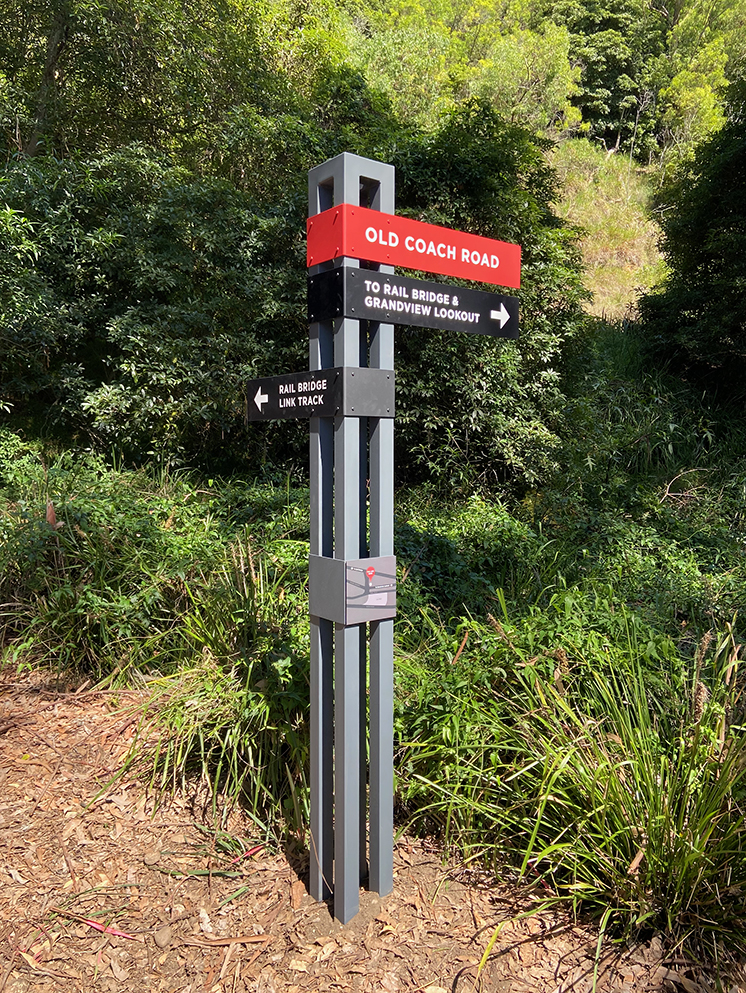

Why choose Miller for outdoor wayfinding signs?
Miller Metal Imaging has 40 years of experience producing interpretive, directional and outdoor signage for projects across Australia.
Choose Miller for:
- Australian-made custom wayfinding signage
- Complete support from planning through to installation
- Photo Anodised Aluminium and digital print options
- Detailed maps, graphics and full-colour information
- Custom sizes, shapes and signage systems
- Custom posts, frames and mounting hardware
- Single signs or complete wayfinding projects
- Experience working with councils, parks, designers and public-space projects
- Australia-wide supply
Planning an outdoor wayfinding project?
Tell us about your site, the signs you need, artwork or maps available, preferred materials and installation requirements.
Our team can help recommend the most suitable signage, printing process, hardware and project approach.