
Interpretation is about more than presenting information.
At its best, it helps people connect with a place, story, object or environment. It takes facts, ideas and knowledge and turns them into something visitors can understand, relate to and remember.
Interpretation can take many forms. From signs and exhibitions to guided walks, storytelling, sound, lighting, digital media and hands on experiences.
The aim is not simply to ask:
“What information should we provide?”
It is also to ask:
“What do we want people to notice, understand, question or feel after this experience?”

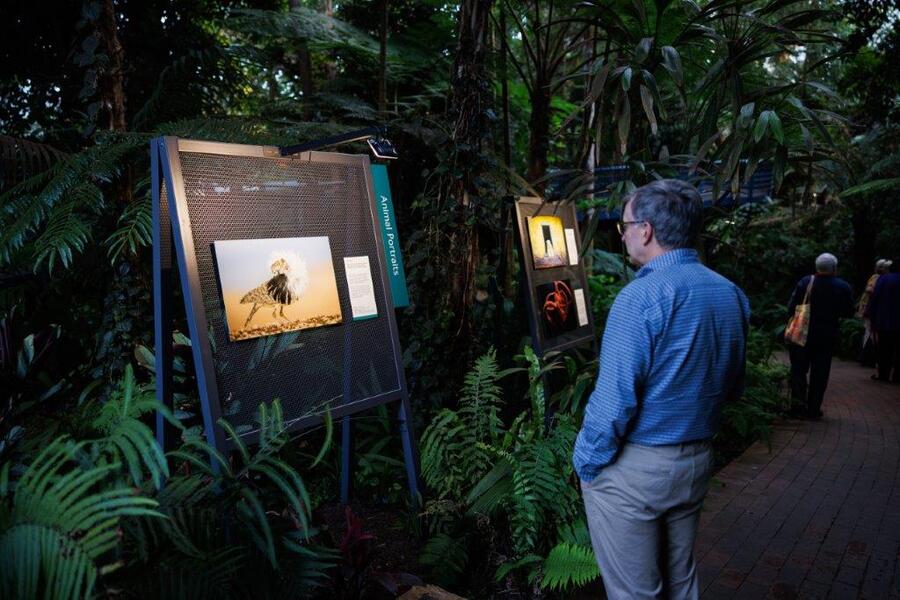
Information vs Interpretation
Information tells us what something is. Interpretation helps us understand why it matters.
A botanical label might identify a plant and provide its scientific name, family and origin.
Interpretation can go further, connecting that plant to ecology, culture, wildlife, history or the broader landscape around it.
Both are important, and they often work best together.
A visitor may first identify a plant through a label, then encounter a broader story through an interpretive sign, guided experience or exhibition that helps them understand its significance.
A great example: Twilight at the Australian National Botanic Gardens
A memorable example of interpretation in action is the Twilight Tour at the Australian National Botanic Gardens.
Experiencing the Gardens after dark completely changes the way visitors interact with the environment.
Sounds become more noticeable. Movement in the landscape attracts more attention. Visitors begin looking, listening and observing in a different way.
The experience uses guided interpretation, storytelling and UV light to reveal parts of the natural environment that are normally hidden during the day.
Under ultraviolet light, biofluorescence can be observed in plants such as grevilleas and kangaroo paws, as well as invertebrates including the introduced black Portuguese millipede.
Rather than simply reading that certain organisms fluoresce under UV light, visitors can see the phenomenon for themselves.
That moment of discovery is a powerful example of interpretation.
It transforms scientific information into an experience.
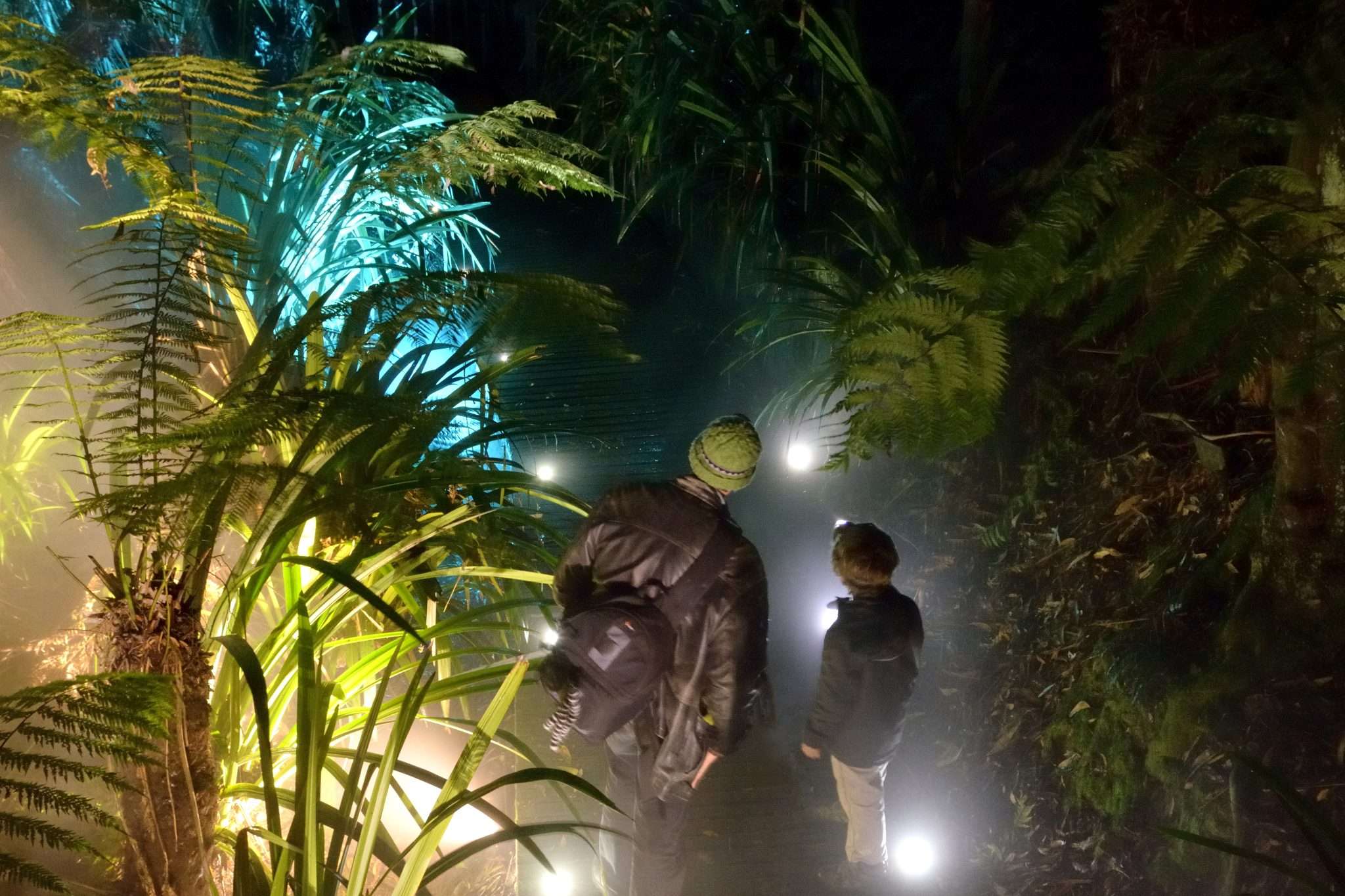



Curiosity is part of the experience
One of the strengths of good interpretation is that it does not always need to provide every answer immediately.
Instead, it can encourage people to look more closely, ask questions and become more curious about what is around them.
A guided night walk is especially effective because the experience is not completely predictable.
Wildlife may appear. A sound may draw attention to something previously unnoticed. A plant may look completely different under UV light.
The interpreter can use these moments to help visitors explore the environment rather than simply deliver a fixed set of facts.
This is one of the key differences between information and interpretation: interpretation invites participation.
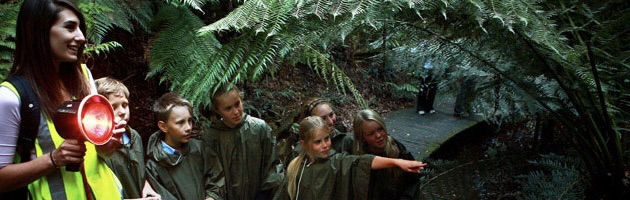
Helping visitors connect with place
At Miller Metal Imaging, we are proud to work with the Australian National Botanic Gardens, supplying botanical labels that help visitors identify and understand the plant collections throughout the Gardens.
These labels form one part of a much broader visitor experience.
A botanical label may provide the essential identification of a plant, while interpretation elsewhere in the Gardens can help visitors understand its ecology, cultural significance, relationships with wildlife or place within the Australian landscape.
Together, these different layers of communication help visitors move from simply seeing a plant to understanding more about why it matters.
For us, this is an important part of interpretation.
The physical signs or labels support the connection between the visitor, the information and the place they are experiencing.
Good interpretation engages more than one sense
Interpretation does not have to rely solely on reading.
Some of the most memorable experiences encourage visitors to listen, touch, observe, move through a space or interact with something directly.
The Twilight Tour demonstrates this particularly well.
Visitors experience darkness, changing sounds, UV light, wildlife activity and the physical landscape itself.
The environment becomes part of the story.
This is especially relevant in botanic gardens, national parks, heritage sites and walking trails, where the location itself can be one of the most effective interpretive tools available.
Where signage fits
Interpretive signage remains an important part of the discipline because it can make stories accessible to visitors independently and consistently over time.
A well-planned interpretive sign might combine:
- Photography and illustrations
- Historical or scientific information
- Maps and diagrams
- First Nations knowledge developed through appropriate consultation
- Questions and prompts
- QR codes and digital extensions
- Clear, accessible layouts
The material, size, shape, location and mounting of the sign also influence how visitors engage with it.
For outdoor interpretation, the strongest results usually come when content, design, fabrication and the surrounding environment work together.
Interpretation Creates Meaning
Good interpretation does not necessarily mean that visitors remember every name, date or scientific detail.
Sometimes its success is much simpler.
A visitor might leave thinking:
I never noticed that before.
I understand why this place matters.
I want to learn more.
That is what interpretation can do exceptionally well.
It gives people more than information.
It gives them a reason to connect.
📞 Phone: 02 6685 5463
📧 Email: info@millermetalimaging.com
Follow us on Social Media: